Afrobeat & Anti-Capitalism: Why Fela Fought the Rich, Not Just the Government. Ever wonder who Afrobeat legend Fela Kuti really targeted with his fiery music? Forget the popular misconception that he primarily fought the Nigerian government; Fela’s legendary resistance had a much sharper focus!
The Kuti Critique: Rich Folks and Resistance
Afrobeat pioneer and socio-political critic Fela Anikulapo-Kuti was renowned for speaking against societal ills. However, his son, Seun Kuti, claims Fela primarily fought the rich folks of Nigeria. Fela’s lyrical arsenal, including songs like ‘Lady’, ‘Swegbe and Akpako’, and ‘Ikoyi Blindness’, directly attacked the wealthy elite.
This resistance was so profound that the rich people, who controlled the media, allegedly ganged up with the government against him, using lies and propaganda to justify the physical assaults Fela endured. Afrobeat, blending traditional African rhythms with jazz, highlife, and funk, became a potent platform for political activism and social critique against corruption and neocolonialism.
This critical legacy is carried forward today on the Bird’s Eye View podcast, co-hosted by Seun Kuti and Pan-Africanist activist Bro. Diallo Kenyatta.
The show provides an intellectual bridge between Africans on the continent and the diaspora, exploring the impact of capitalism and the global state of Black communities. The hosts explicitly critique capitalism as an unsustainable system that innately engenders imbalance. They advocate for revolution—or “counter conquest”—as the appropriate response to imperialism.
This critical stance draws on figures like Kwame Ture (Stokley Carmichael), who stated that because racism gets its power from capitalism, being anti-racist fundamentally means being anti-capitalist. Through engaging and fun conversations, the podcast tackles these intense, thought-provoking topics, aiming to foster global Black consciousness.
The narrative that Nigerian youth are “unemployable” has gained significant traction, recently highlighted by the Founder of Moniepoint, who stated he cannot fill 500 vacancies because of a lack of suitable talent. This sentiment is echoed across various sectors, such as a cold room business owner struggling to find staff despite offering a competitive monthly salary of N200,000 to N250,000. However, a closer examination reveals that this is not a unique character flaw of Nigerians, but rather a complex structural illusion, Nigeria’s Employability Crisis.
It is essential to recognize that the “employability crisis” is a global phenomenon, not a local one. As of 2025, the United States has over 8 million unfilled job vacancies due to a mismatch between education and employer needs, while Germany and Japan are facing their worst skilled labour shortages in history. Even China, with its massive population, struggles with millions of unemployed graduates while factories remain desperate for skilled technicians. This suggests that the issue is a structural development problem that economies face at various stages of growth, rather than a lack of individual intelligence or discipline.
The Paradox of Nigerian Resourcefulness
There is a profound contradiction in the claim that Nigerians are unemployable, particularly when looking at companies like Moniepoint. The very foundation of Moniepoint’s billion-dollar payment infrastructure is built on the resourcefulness of Nigerians: the street agents in Oshodi and Kano, market women using POS terminals, and small business owners who adopted digital payments. It is a paradox to build a successful business model on the back of local intelligence and then question the intelligence of that same population.
The Leadership and Training Gap
Historically, the most sophisticated companies have not merely “hired” competence; they have built it. When Japan faced a post-war skills crisis, Toyota developed its own internal training philosophy to turn raw, unskilled workers into world-class talent. If a technology company in a developing economy expects to find talent “fully formed” without investing in internal training infrastructure, it represents a leadership gap rather than a talent problem.
Redefining “Employable”
The current definition of “employable” in Nigeria is often narrowly modelled on Silicon Valley and Western corporate frameworks. This ignores the extraordinary economic skills young Nigerians demonstrate daily:
Managing complex logistics entirely through WhatsApp without formal training.
Operating thrift systems for hundreds of people with zero defaults and no software.
Repairing engines and electronics with improvised tools that should not work.
These individuals possess high-level intelligence and problem-solving skills; they simply are not packaged in a CV format that fits a Western corporate template.
The employability gap is ultimately a structural problem rather than a motivation problem. It is the result of a broken education system that produces graduates without practical skills and an economy that lacks enough industries to provide real-world work experience. When the output—in this case, the workforce—is consistently disappointing, the solution is not to blame the output, but to examine the process and the “soil” in which they were given to grow. Until there is an honest interrogation of the system rather than the individual, the crisis will only continue to escalate.
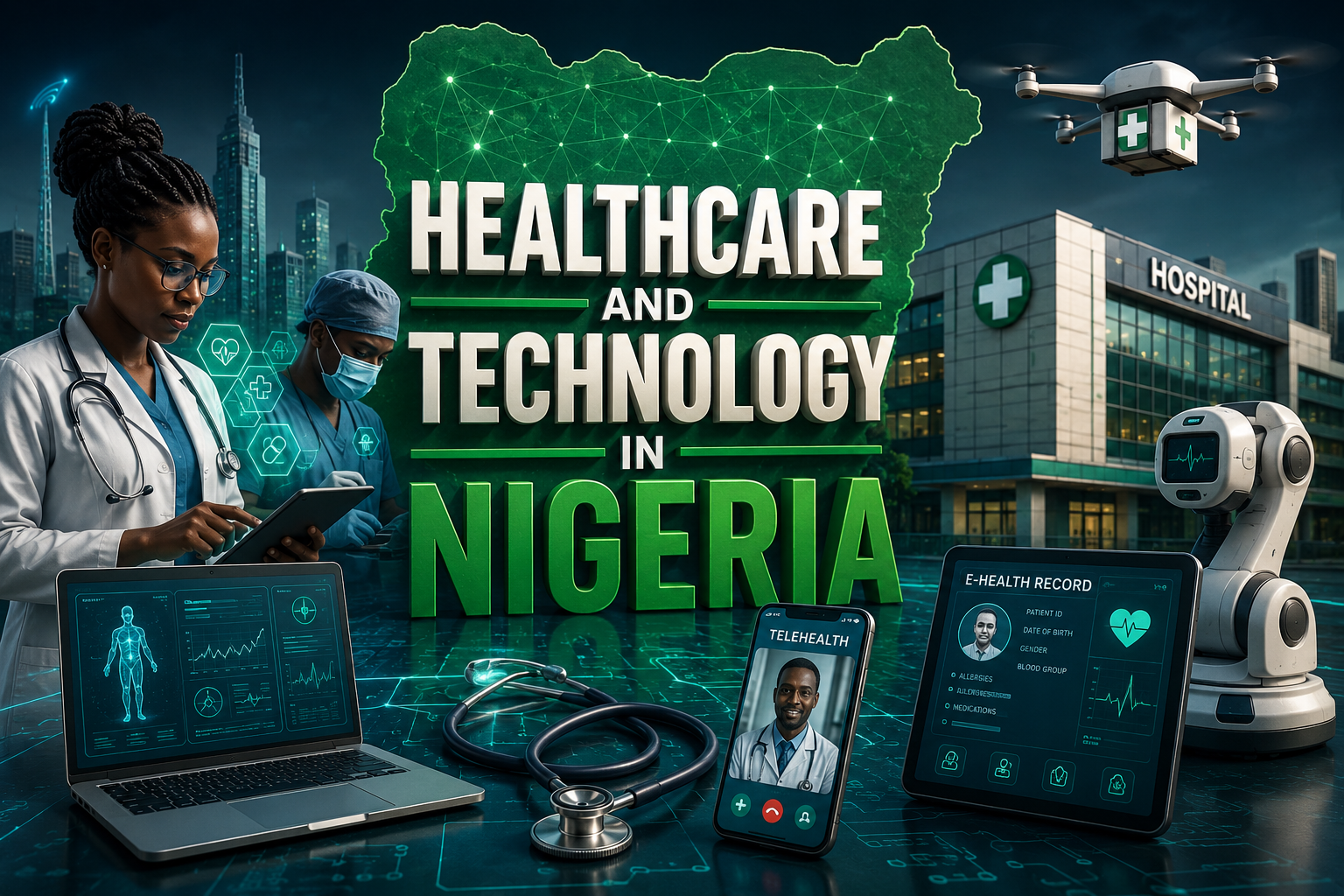
Nigeria’s current employability crisis, characterized by a 60.6% skills mismatch and the pervasive “Japa” syndrome, has inflicted serious structural damage on the nation’s two most critical growth sectors: healthcare and technology. While the National Bureau of Statistics recently reported a decline in the unemployment rate to 4.3% in Q2 2024, this figure masks a “statistical surface” where underemployment and a massive loss of high-value human capital remain the true barometers of economic distress.
The Healthcare Sector: A Human Resource Emergency
The healthcare sector is facing a “net developmental detriment” due to the massive flight of trained professionals.
Critical Manpower Shortages: Between 2016 and 2018, Nigeria lost over 9,000 medical doctors to the UK, Canada, and the USA. In a single six-month period between late 2021 and May 2022, 727 doctors relocated to the UK alone. This has left Nigeria with a doctor-to-patient ratio of 1:10,000, starkly lower than the WHO recommendation of 1:1,000.
The Nursing Exodus: The number of Nigeria-trained nurses on the UK register increased by 68.4% in five years, rising from 2,790 in 2017 to 7,256 in 2022.
Impact on Digital Health Infrastructure: Beyond frontline care, the migration of IT professionals has crippled healthcare software development. Agile teams developing healthcare information systems report a sudden loss of team members, resulting in the total erosion of documented design reasoning. This results in “security technical debt,” making clinical systems vulnerable to data privacy breaches and regulatory non-compliance with HIPAA and GDPR standards.
Institutional Decay: Trainers and consultants in residency programs report deep frustration as their “raw material” (trainees) treat residency merely as a way to fund travel documents, throwing medical institutions into disarray.
The Technology Sector: Growth vs. The “Clout Economy”
While Nigeria’s ICT sector contributed approximately 20% to real GDP growth in Q2 2024, the industry is hitting a “productivity ceiling” due to talent shortages and flawed recruitment metrics.
The Advanced Skills Gap: While 33% of tech job postings require basic digital skills, only 20% of the labor pool possesses the advanced competencies (data analysis, computer science, blockchain) required to drive the digital economy.
The “Clout Economy” Crisis: A new phenomenon in the Nigerian tech landscape is the emergence of “visibility bias.” Recruiters increasingly favor candidates with large social media followings (LinkedIn/X) as a proxy for competence. This has created a “Silent Expert” problem, where highly qualified practitioners without a social media presence become invisible.
Rising Technical Debt: The reliance on social visibility over technical depth has led to the hiring of developers who lack fundamental system design skills, resulting in project failures and unscalable software architectures.
Leadership Voids: The departure of seasoned Scrum Masters and Product Owners has caused a collapse in agile ceremonies. Decision bottlenecks occur because teams lack authority figures to approve technical changes, resulting in months-long delays in product releases.
Cross-Cutting Consequences: Psychological and Operational
Both sectors share common symptoms of the structural failure of the human capital ecosystem:
Team Fragmentation: High staff turnover has created a “revolving door” effect, destroying team cohesion and trust.
Loss of Tacit Knowledge: When senior professionals leave, they take unrecorded domain expertise with them, leaving junior staff unable to manage complex legacy systems or meet regulatory standards.
Emotional Burnout: Remaining staff are frequently “dumped” with the tasks of exited senior colleagues, working late nights without extra compensation, which further fuels their own intentions to migrate.
Recommendations for Resilience
Sector-Specific Funding: Establish a “Health Development Bank” to provide low-interest loans for private medical practitioners and improve healthcare infrastructure.
Curriculum Realignment: Universities must update curricula—60% of which have not been revised in over six years—to incorporate practical digital literacy and healthcare regulatory training.
Institutional Documentation: Technology firms must mandate formal knowledge management platforms (e.g., Confluence) to preserve organizational memory during high turnover periods.
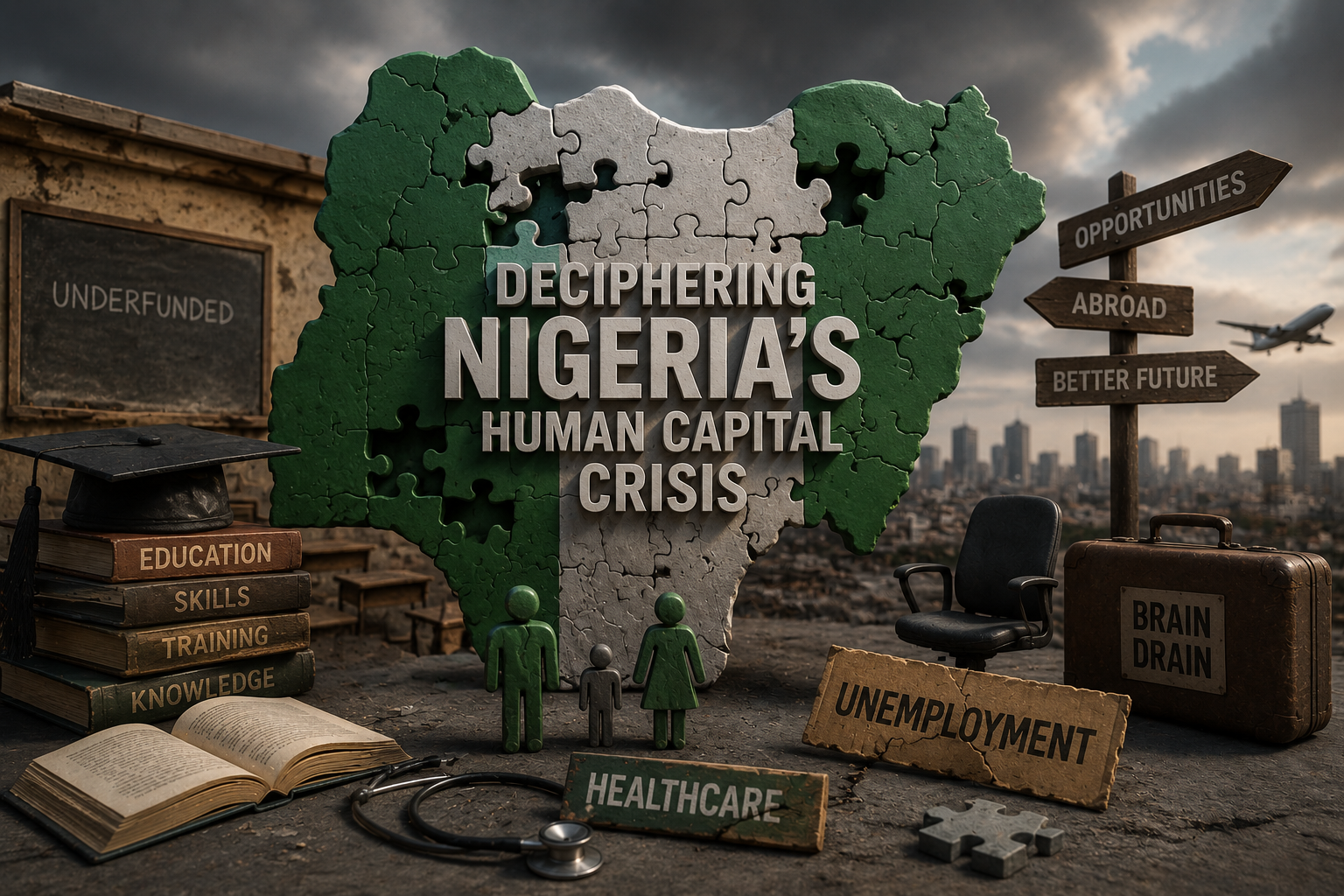
The prevailing narrative that Nigerian youth are simply “unemployable” is a dangerous oversimplification that masks a profound structural malfunction of the human capital ecosystem. While tech founders and business owners report hundreds of unfilled vacancies, a data-driven interrogation reveals that the crisis is not a character flaw of a generation, but the result of misaligned education, jobless economic growth, and a chronic leadership gap, which has led to Nigeria’s Human Capital Crisis.
The crisis is fueled by three distinct but interlocking systemic failures:
1. The Education-Industry Schism:
There is a 60.6% skills mismatch in Nigeria, driven by a profound disconnect between academic training and labor market demands. The crisis is qualitative rather than quantitative; approximately 60% of university lecturers surveyed have not updated their curricula in over six years, a staggering delay in a global economy reshaped by AI and automation. Consequently, the system emphasizes rote memorisation over practical, technical, and soft skills like critical thinking and adaptability. This creates a “treadmill of unemployability” where graduates possess degrees but lack the “workforce readiness” required to thrive in professional environments.
2. The Paradox of “Jobless Growth”:
Nigeria’s economy has historically experienced expansion that fails to induce proportional formal employment. This is largely due to an over-reliance on the capital-intensive oil and gas sector, which accounts for 80% of budgetary income but provides negligible direct employment. While the services sector has absorbed some labor, it is bifurcated: most workers are pushed into low-productivity informal roles (93% of the workforce) rather than modern, high-value tech or financial roles. Furthermore, an infrastructure deficit—specifically unreliable electricity—costs the economy $29 billion annually, imposing operational hurdles that prevent SMEs from scaling and hiring.
3. The Leadership and Training Void:
A significant cause of the “unemployability” label is the “Experience Paradox,” where employers demand 3–5 years of experience for entry-level roles because they are unwilling to bear the costs of internal training. Unlike global standards set by companies like Toyota, which built world-class competence from raw talent, many Nigerian firms expect talent to arrive “fully formed”. Additionally, the definition of “employable” is often narrowly modelled on Silicon Valley frameworks, ignoring the extraordinary improvised economic skills young Nigerians demonstrate daily in logistics, repair, and informal finance.
This environment has triggered the “Japa Syndrome,” a mass exodus of highly skilled professionals. Between 2016 and 2018, Nigeria lost over 9,000 medical doctors to the West, leaving the country with a doctor-to-patient ratio of 1:10,000, far below the WHO recommendation of 1:1,000. This “net developmental detriment” erodes institutional memory, as the departure of senior professionals leaves junior staff without the mentorship necessary to maintain complex systems or meet regulatory standards.
Curriculum Revolution: Education must be recalibrated through mandatory work-based learning and a shift toward STEM and vocational training. Curricula should be co-designed by industry leaders to ensure graduates meet real-world technical requirements.
The “Talent Accelerator” Model: Nigeria must transition from isolated training schemes to a unified national skills system that tracks live market data and creates public-private partnerships for training delivery.
Incentivizing the Private Sector: Instead of merely complaining about talent, the government should establish a National Productivity Fund to support firm-level innovation and worker upskilling. Furthermore, creating a “Health Development Bank” to provide low-interest loans could help retain medical professionals by improving local infrastructure.
Formalizing the Informal: To break the “informality trap,” the government must reduce bureaucratic complexity and multiple taxation, making it easier for the 93% of informal workers to transition into the formal tax net and access growth capital.
Ultimately, the problem is not the “output”—the Nigerian youth—but the “soil” in which they are given to grow. Until there is a coordinated effort to fix the “Generator Economy” and bridge the education-industry schism, Nigeria’s demographic advantage will remain a liability rather than a powerhouse.